About ADNP Europe
The European Association for the ADNP syndrome, ADNP Europe in short, was founded in Belgium in 2025 by parents of children affected by the ADNP Syndrome.
Our ambition is:
To develop a global network of patients and families affected by the ADNP syndrome to build bridges within the ADNP Community worldwide, share experiences, and valuable ADNP related information that practically help ADNP patients and their families on a daily basis;
To raise awareness in the general public about the ADNP Syndrome and promote dialogue among all stakeholders interested in ADNP syndrome (e.g. families, scientific community, public authorities, universities, private sector) to facilitate information sharing and create opportunities for enhanced collaboration;
To promote all actions aimed at improving the well-being and development of persons carrying a mutation of the ADNP gene or an associated syndrome;
To support scientific research in the field of the ADNP-gene and associated syndromes through fund raising campaigns and lobbying with relevant Public authorities at National, European, and global Level;
To defend the rights to inclusion in society of those affected and fight against all forms of discrimination against them.
...To support anything that would facilitate the development of a treatment for the ADNP Syndrome!
Our team
Marijn Krijger
Board member
Roberto Tripi
Board Member
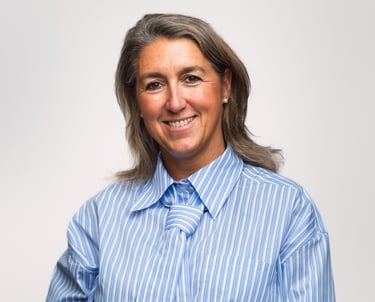
Kelly Verbruggen
President
Antoine Bourgoignie
Vice-President and SecretARY General
Scientific Committee
In order to achieve its goals, ADNP Europe is supported by a world leading team of scientists, researchers and experts specialized in ADNP and related syndromes. Together they cover a broad spectrum of knowledge and experience, and help us in reaching a global network. They help us understand better the latest scientific and research developments, and advise the Board in defining an effective targeted action plan.
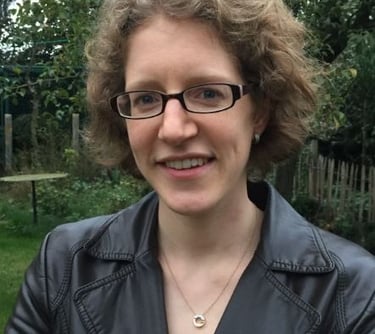
Anke Van Dijck, M.D.
University of Antwerp
My interest in developmental disorders in adulthood led me to specialize in neurology. During my training, I joined the Cognitive Genetics research group and began my PhD in 2013, focusing on the genetic causes of these conditions.
I still remember the excitement when Nathalie, Frank, and Céline received the first exome sequencing results. Soon after, they published the first 10 cases in Nature Genetics in 2014 – a milestone that marked the beginning of rapid progress. From then on, everything accelerated.
Encouraged by parents of recently diagnosed children, clinicians from all over the world reached out to share clinical data. Social media played an unexpected but crucial role, helping us connect families and complete missing data. Thanks to this collaboration, we were able to build a much clearer picture of the disorder. By 2018, we had gathered enough information to describe a group of 78 children. What started as a scientific quest soon became a shared journey with families, clinicians, and researchers worldwide. Through these efforts, the syndrome found not only a face, but a voice.
Looking ahead, our work will always be about more than research in a lab — it’s about the people and families who live with this condition every day. Every conversation with a parent, every story shared, reminds us why this work matters. These families have taught us resilience, hope, and the power of community. Together, we’re not just uncovering the science behind a rare disorder; we’re building a network of support and understanding. Our goal is simple yet profound: to ensure that no family feels alone on this journey, and that every discovery brings us a step closer to better care and a better quality of life.
Dr. Claudio D'Incal, Ph.D.
University of Antwerp
Driven by both a personal and scientific passion, Dr. Claudio Peter D’Incal has dedicated his career to understanding and improving the lives of children affected by rare neurodevelopmental disorders. His fascination with genetics and brain function began at an early age, inspired by close family ties — a beloved aunt with a physical and motor disability, and the sister of a dear friend with a neurodevelopmental disorder. Breaking taboos and seeing firsthand how often individuals with disabilities are left without proper support sparked a lifelong motivation: to bring change, hope, and better quality of life to these children and their families.
During his master’s and PhD trajectory in Biomedical Sciences, Claudio joined the renowned research group of Prof. dr. R. Frank Kooy at the Center of Medical Genetics (UZA/UA), Antwerp, Belgium. There, he focused on the consequences of rare genetic mutations in neurodevelopmental disorders, with a special focus on the Helsmoortel-Van der Aa syndrome (ADNP).
Early in his PhD, Claudio came into contact with the family of Cédric Peeters, an encounter that profoundly shaped his research journey. In Antwerp, he developed a mouse model with a mutation that mirrors “hotspot mutations” that have been repeatedly found in Helsmoortel-Van der Aa syndrome patients. This model allowed him to explore the molecular and behavioral aspects of the disease — and remarkably, the mice displayed symptoms strikingly reminiscent to those observed in children with Helsmoortel-Van der Aa syndrome.
Even more groundbreaking was Claudio’s translational work — comparing the brain of his mouse model to the brain tissue of an ADNP child who had sadly passed away from multiple organ failure. The similarities they uncovered were extraordinary, shedding new light on the disease’s mechanisms and paving the way for potential treatments.
Beyond discovering disease mechanisms, Claudio has also investigated the function of the ADNP protein — still one of the biggest mysteries in the field — and tested new therapeutic strategies in both patient-derived cell models and animal systems. Through international collaborations, he investigated multiple Adnp mutant mouse models in close collaboration with the Gozes laboratory (Tel Aviv University, Israel), deepening global understanding of the disorder’s complexity.
Claudio’s leadership extends beyond the lab. Together with the team, he organized the world’s first ADNP scientific congress in Antwerp — a groundbreaking event that was successfully repeated two years later. For the parent day at this congress, he closely collaborated with Kelly Verbruggen, the mother of the first ADNP child ever diagnosed worldwide. Kelly maintains close contact with the laboratory, and together they aim to translate clinical research questions directly from the families and children to the lab, a true “patient-to-lab” approach. This first conference not only strengthened ties between researchers and families but also laid the foundation for the European ADNP association and inspired broader scientific collaborations within the community to jointly advance research on this syndrome.
Claudio’s tireless advocacy and commitment to raising awareness for this rare condition have taken him around the world, where he has spoken at numerous international conferences, received multiple awards, and gained international recognition. His research has also been featured in major scientific publications and popular scientific magazines such as Eos Magazine, helping to bring knowledge to a wide audience.
To date, Claudio’s doctoral work has resulted in 15 first-author publications — an extraordinary achievement that underscores his scientific excellence and deep personal connection to the patient community. He has inspired and mentored over 30 interns, all of whom have shared in his passion and purpose. His work has been supported by the Marie-Marguerite Delacroix Foundation (Belgium) and by parent-led fundraising initiatives, including a German campaign that raised over €50,000 in just one week to support his research.
But above all, Claudio’s mission is personal: “I deeply care about these children,” he says. “Their resilience gives me strength every single day. My goal — my promise — is to dedicate my life to improving their lives.”
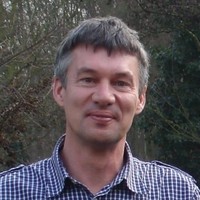
Prof. Frank Kooy, M.D., Ph.D.
University of Antwerp
As a Cognitive Genetics group, we have always strived to apply the most advanced technologies available to make diagnoses possible for patients when existing techniques still fell short. The excitement was therefore immense when, in the early 2010s, we were finally able to send samples from ten children and their parents for whole exome sequencing—a revolutionary (and at the time extremely costly) technique capable of analyzing all genes across the entire genome in one go. Expectations were high, and I vividly remember the day the data came back. The sequencing had been performed in the United States, where the technology was more established, but when we received the results, we were overwhelmed by the sheer amount of data and unsure where to begin the analysis. It felt like arriving in a new city without a map or any sense of direction.
Fortunately, we already had an excellent team in place at that time: Dr. Nathalie Van der Aa, who knew the patients in great detail; Dr. ir. Geert Vandeweyer, who took charge of the bioinformatics; and Dr. Celine Helsmoortel, the PhD student leading the project.
Step by step, we began to make sense of the data, and after several months, our doubts faded: ADNP appeared to be a promising candidate gene that could explain Cédric’s clinical presentation.
But then…Just as a single swallow does not make a summer, a single mutation in one gene does not yet make a diagnosis. We reached out to other research groups who, like us, were pioneering these new sequencing technologies. Special meetings were organized for this purpose—most memorably our annual gathering in Troina, sometimes quite literally under the shadow of Mount Etna in Sicily. Our enthusiasm grew when we learned that several other groups had also identified variants in the ADNP gene. Around that time, we were receiving reports of a new child with an ADNP mutation nearly every month. That may not seem like much now, but in the early days of whole exome sequencing, ADNP was one of the most frequent “emerging conditions.”
When we compared the clinical features of these children, we noticed striking similarities among them. On a cold winterday in Stockholm, we identified the tenth patient in collaboration with a Swedish research group. This child, too, shared the same recognizable features as the others—and at that moment, we knew for certain: the Helsmoortel–Van der Aa syndrome had officially been discovered.
Of course, the story did not end with this first characterization. The next question was what it truly means to have the Helsmoortel–Van der Aa syndrome. Dr. Anke Van Dijck explored and described this in remarkable detail during her training as a neurologist. Many questions still remain—what exactly does the ADNP gene do, and how does it function? Our newly minted doctor, Claudio D’Incal, has devoted himself passionately to this line of research. Happy to be part of the Scientific Board of the European Association ADNP!
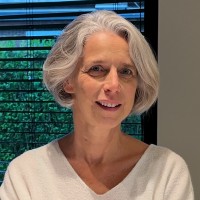
Dr. Natalie Van der Aa, M.D., Ph.D.
University of Antwerp
As a pediatrician and geneticist she has always been fascinated to learn more about understanding the underlying mechanism of disease and congenital abnormalities.
She was working as a clinical geneticist at the University Hospital of Antwerp when she met little Cédric and his parents in her clinic for developmental disorders. She remembers very well how she was intrigued by his big blue eyes that seemed to be asking her to tell his parents he was going to be fine. He was just under one year of age at that time. But she knew he had an underlying genetic disorder to his failure to thrive, his heart murmur, his somewhat peculiar face and his poor development. So, she started testing the genes for known syndromes that his problems could be related to. These tests all came back normal and Cédric was left without a diagnosis in 2-3 years to follow.
Determined to find a diagnosis in this young boy who clearly had a clinical picture of an underlying syndrome, she discussed further research possibilities with Professor Frank Kooy who had been the promotor to her thesis on developmental disorders.
As this novel technique ‘Whole Exome Sequencing’ was about to be implemented in his research lab he suggested that she would talk to his PhD student, Celine Helsmoortel.
Using the new technique, Celine sequenced Cédric’s DNA and found a mutation in a gene that was a possible candidate to be the cause of his problems. This was the ADNP gene. Frank, Celine and Nathalie explored the meaning of this finding, initially by learning and researching everything about this gene that was to be found. Subsequently the asked other research groups around the world to look specifically for ADNP mutations in their samples of patient cohorts with developmental disorders. That way they were able to gather a group of 10 patients with mutations in ADNP. She compared pictures and medical records of these boys and girls and was able to delineate the clinical picture caused by mutations in the ADNP gene while Celine and Frank were diving into researching the function of the gene.
Together with all clinicians and labs of these 10 patients Celine Helsmoortel, Frank Kooy and herself published on this novel syndrome in Nature Genetics in 2014. After my departure from the University Hospital, Anke Van Dijck gathered many more children with ADNP in the years to follow to expand (as well as narrow down) the exact clinical presentation of the Helsmoortel – Van der Aa syndrome. Claudio D’Incal subsequently wrote a monumental thesis on the functional consequences of mutations in ADNP.
She says:”I am deeply grateful to all the people that have contributed to my work and the people that are continuing to do so. But most of all I feel immense respect for all the Helsmoortel- Van der Aa patients and especially their parents. Especially to Cédric and his family I say ‘It has been a true privilege to meet you in this lifetime’.”
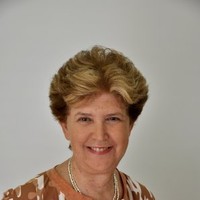
Prof. Illana Gozes, Ph.D.
Tel Aviv University
Illana Gozes is an Israeli scientist whose research focuses on the molecular structure and function of the brain, with an emphasis on finding biological markers and developing therapeutics against autism, Alzheimer's disease and related disorders, as well schizophrenia. She is a Full Professor (Emerita) of Clinical Biochemistry, former incumbent of the Lilly and Avraham Gildor Chair for the Investigation of Growth Factors, Director of the Elton Laboratory for Molecular Neuroendocrinology, a member of the Department of Human Molecular Genetics and Biochemistry at the Gray Faculty of Medical and Health Sciences, and Sagol School of Neuroscience at Tel Aviv University.
Professor Gozes is the Editor-in-Chief of the scientific journal "Journal of Molecular Neuroscience" which deals with the study of the nervous system, and previously served as head of The Adams Super Center for Brain Studies[1] at Tel Aviv University (2006-2014) and as President of the Israel Society for Neuroscience (2008-2010). In 2016, she was appointed by Education Minister Naftali Bennett to the Council for Higher Education (until 2022). In 2023, she was appointed President of the European Society for Neurochemistry (until 2025). She also serves as the President of the Summer Neuropeptide Conference.
Professor Gozes’s laboratory discovered activity-dependent neuroprotective protein (ADNP) and found that it is essential for brain formation and protects neurons that stop transmitting electrical signals. Furthermore, the lab revealed a fragment of the protein responsible for rebuilding brain cells that suffer from glucose or oxygen supply deficiency.
Marc Bühler, Ph.D.
http://orcid.org/0000-0001-6661-9795
Prof. Bühler studies how genes are controlled in our cells and how disruptions in this control can lead to disease. He leads a research group at the Friedrich Miescher Institute for Biomedical Research (FMI) in Basel, Switzerland. The FMI, supported by the Novartis Research Foundation, is dedicated to fundamental biomedical research.
His team investigates how cells decide which genes to turn on and off - a process that is critical during development and for the formation of organs such as the brain. When these processes are disrupted, they can affect the proper functioning of the body.
For the ADNP community, his laboratory discovered that ADNP forms a molecular partnership called the ChAHP complex, which helps regulate gene activity. Follow-up studies have provided insight into how ADNP functions in cells. While much about ADNP remains to be discovered, his team continues to study its molecular roles to better understand how mutations affect the proper functioning of our body.
Marc Bühler has received international honors, including two European Research Council (ERC) grants, the Friedrich Miescher Prize, and in 2018 was elected a member of EMBO. On the ADNP Europe Scientific Committee, he brings expertise in gene regulation and chromatin biology to support research that benefits affected families.
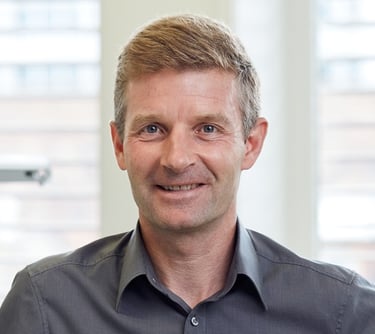
Roberta Onesimo, M.D., Ph.D.
Policlinico Gemelli, Roma
Roberta Onesimo, M.D., Ph.D.
Marc Bühler, Ph.D.
Senior Group Leader, Friedrich Miescher Institute for Biomedical Research; Professor of Molecular Biology, University of Basel, Switzerland
Contact Us
We are here to support families and individuals affected by ADNP gene mutations. Reach out today.